
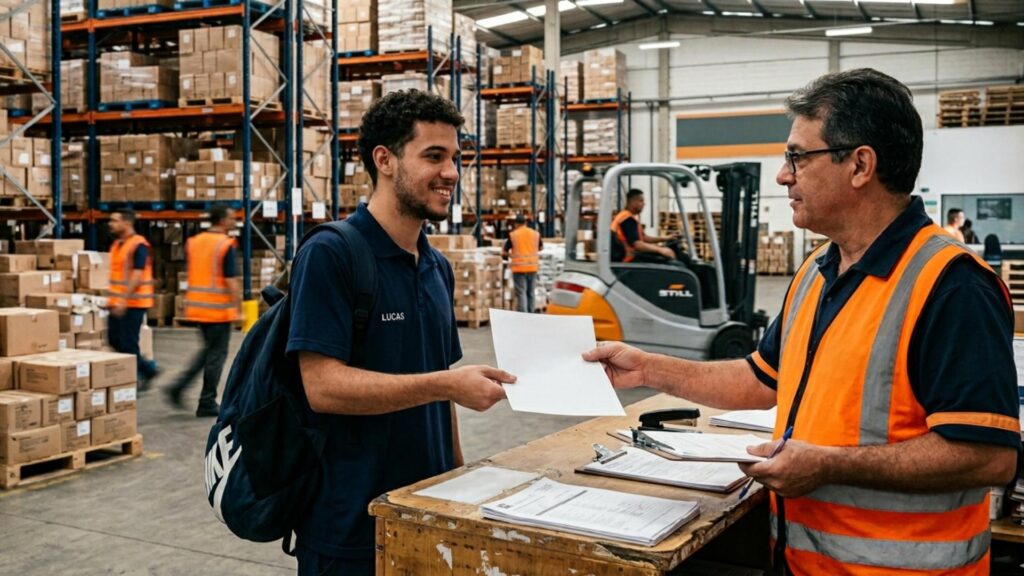
If you’re looking for work and want a sector where the demand is real and the requirements are straightforward, logistics and warehousing is worth your attention.
Pay starts around $23/hour for entry-level positions, and the largest employers — Amazon, UPS, FedEx, Walmart — hire continuously.
Here’s exactly how to navigate it.
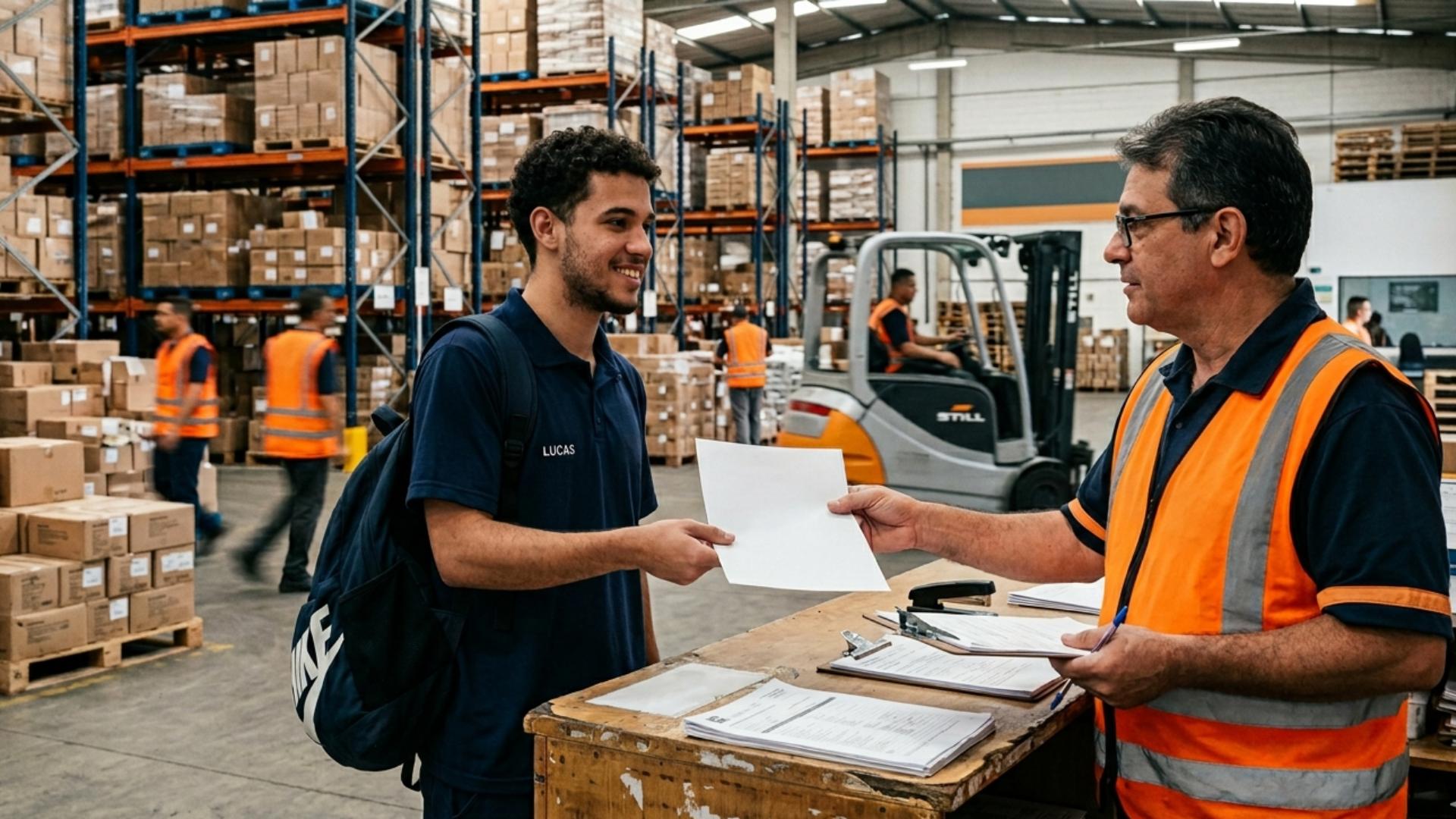
The Roles — and What They Pay
Before applying anywhere, it helps to know which position fits your situation. Here’s a clear breakdown:
| Role | What You’ll Do | Avg. Pay |
|---|---|---|
| Warehouse Associate / Material Handler | Move products, load/unload trucks, scan and pack orders, restock shelves | ~$23/hour |
| Forklift Operator | Operate industrial trucks to move pallets; OSHA certification required | $24–$25/hour |
| Logistics Driver | Handle outbound shipments, follow routes, manage cargo | ~$31/hour |
| Logistics Coordinator | Manage schedules, communicate with suppliers and carriers, organize inventory data | ~$47/hour |
If this is your first move into the sector, start with Warehouse Associate. It has the most openings, the lowest requirements, and a clear track toward every other role on that list.
Step 1 — Check Your Work Authorization
Before you touch a resume or job board, confirm you’re eligible to work legally in the country. This step comes first because nothing else moves without it.
What you need:
- A Social Security Number (SSN) or an Employment Authorization Document (EAD)
- A government-issued photo ID (passport, driver’s license, or state ID)
All employers are required by federal law to run your status through E-Verify. On your first day, you’ll complete an I-9 form — standard for every new hire in the country.
If you’re on a student visa, check whether your CPT or OPT authorization covers the type of work you’re applying for. Many warehouse shifts qualify under practical training terms, but it depends on your specific program.
Step 2 — Know What Employers Are Actually Screening For
For entry-level warehouse roles, experience is secondary. Here’s what hiring managers actually look at first:
- Reliability — showing up on time, every shift. Turnover is high in this industry, and a candidate who signals genuine steadiness stands out more than one with a longer resume.
- Physical readiness — most roles involve standing, walking, and lifting up to 50 lbs for the full duration of a shift.
- Schedule flexibility — facilities run 24/7. Being open to nights, early mornings, weekends, or overtime makes you considerably easier to place.
- Basic tech comfort — handheld RF scanners, WMS interfaces, digital picking systems. You don’t need to know these in advance, but you need to be ready to learn them quickly.
For coordinator, supervisor, or analyst roles, add Warehouse Management System (WMS) experience, inventory software, and basic data handling to that list.
Step 3 — Consider Getting a Certification Before You Apply
No credential is required for most entry-level positions. But having even one puts your application ahead of others at the same experience level.
Forklift Certification (OSHA-Compliant) The most in-demand credential in the sector. OSHA requires employers to verify that any operator of powered industrial trucks holds a valid cert before touching the equipment. You can complete the training at a community college, vocational school, or private provider — typically in one to two days.
Certified Logistics Associate (CLA) An entry-level industry credential covering supply chain fundamentals, inventory basics, and warehouse operations. It tells an employer you’ve invested in understanding the work before walking through the door.
Before spending money on anything: open Indeed, search “warehouse jobs” or “logistics associate” in your city, and read through 10–15 listings. Note which certifications appear most frequently. That’s your demand signal — target those first.
Step 4 — Build a Focused, Honest Resume
One page is enough. Warehouse hiring managers spend seconds per application. Clarity matters more than volume.
What to include:
- Name and contact details (phone and email)
- Work history — any job counts; prioritize anything hands-on, physically demanding, or time-sensitive (construction, delivery, retail, food service, cleaning)
- Skills — forklift certification if you have it, RF scanner experience, ability to lift up to 50 lbs, bilingual if applicable
- Availability — the shifts you can cover and whether you’re open to overtime
If you have zero prior work experience: lead with your availability and physical readiness. Warehouse employers care most about whether you’ll show up — make sure that comes through clearly.
One firm rule: don’t fabricate job titles, dates, or certifications. Background checks and employment verifications are routine at large employers. Discrepancies surface quickly and end the process on the spot.
Step 5 — Find the Right Listings
| Source | Best For |
|---|---|
| Indeed.com | Widest selection; filter by ZIP, pay, and shift type |
| hiring.amazon.com | Amazon-specific roles; fast process |
| careers.fedex.com | FedEx openings across the country |
| jobs.ups.com | UPS warehouse and driver roles |
| careers.walmart.com | Walmart fulfillment and distribution centers |
| ZipRecruiter | Regional distribution centers and mid-size logistics companies |
| Staffing agencies | Fastest route to a first shift; Randstad, Manpower, Staffmark, Adecco |
Search terms that work well on Indeed: “warehouse associate,” “material handler,” “forklift operator,” “logistics coordinator,” “fulfillment associate.”
Cities with the highest volume of openings:
- Inland Empire, CA
- Dallas–Fort Worth, TX
- Greater Chicago, IL
- Central Pennsylvania
- Atlanta, GA
- Louisville, KY
- Houston, TX
- Indianapolis, IN
If you’re near any of these, your search will return significantly more options and faster hiring timelines.
Step 6 — Apply and Prepare for the Interview
Apply the same day you find a listing that fits. Warehouse openings at large fulfillment centers fill fast.
The typical application process:
- Submit your online application — resume plus questions about availability and work authorization
- Complete a brief online assessment if required (usually safety awareness or basic reasoning)
- Receive a response within 24–72 hours to schedule an interview
- Attend a 20–30 minute interview, in person or virtual
Common interview questions:
- “Tell me about a time you had to meet a deadline or a production target.”
- “How do you stay focused during long, repetitive shifts?”
- “Are you available for nights, weekends, or overtime?”
Answer around three themes: reliability, safety awareness, and ability to follow instructions and adapt quickly. Those are the signals hiring managers listen for.
After the conditional offer:
- Background check — standard at most large employers
- Drug test — required at many employers before your start date
- I-9 completion, schedule confirmation, and onboarding details follow once you’re cleared
Step 7 — Where You Can Go From Here
The sector has clearer internal advancement than most entry-level industries. Here’s what the typical path looks like:
| Stage | Roles Available |
|---|---|
| Entry level | Warehouse Associate, Material Handler, Forklift Operator |
| First advancement | Team Lead, Shift Supervisor (often within months for strong performers) |
| Specialized tracks | Safety Trainer, PIT Instructor, Inventory Control, Quality Assurance |
| Technical track | Maintenance Technician, Mechatronics — higher pay, often includes tuition assistance |
Automation is also reshaping what these careers look like long-term. Warehouses across the country are integrating robotics, AI-assisted picking systems, and advanced WMS platforms. Workers who develop comfort with these tools — even at a basic operational level — will have access to more roles and stronger earning potential going forward.
Final Thoughts
Logistics and warehousing won’t be the right fit for everyone. The work is physical, the shifts can be long, and the environment moves fast. But for people who want stable work, a clear paycheck, and a sector that’s genuinely hiring — it’s one of the more honest options available right now.
The steps in this guide are straightforward because the process itself is straightforward. You don’t need to navigate complicated applications or wait months for a response. Most of what determines whether you get hired comes down to showing up prepared, being honest about your availability, and applying consistently.
Start with one listing today. Read the job description carefully, tailor your resume to match what they’re asking for, and submit the same day. That’s the entire playbook.
Quick Reference
| Work authorization | SSN or EAD (required by law) |
| Minimum education | High school diploma or GED for most roles |
| Certifications | Forklift (OSHA) recommended; CLA is a strong plus |
| Resume | One page, honest, focused on availability and physical readiness |
| Where to search | Indeed, direct employer portals, staffing agencies |
| What employers screen for first | Reliability, flexibility, physical readiness |
| Background check | Standard at most large employers |
| Drug test | Required after conditional offer at many employers |
Browse current openings at Indeed — Warehouse & Logistics Jobs.